
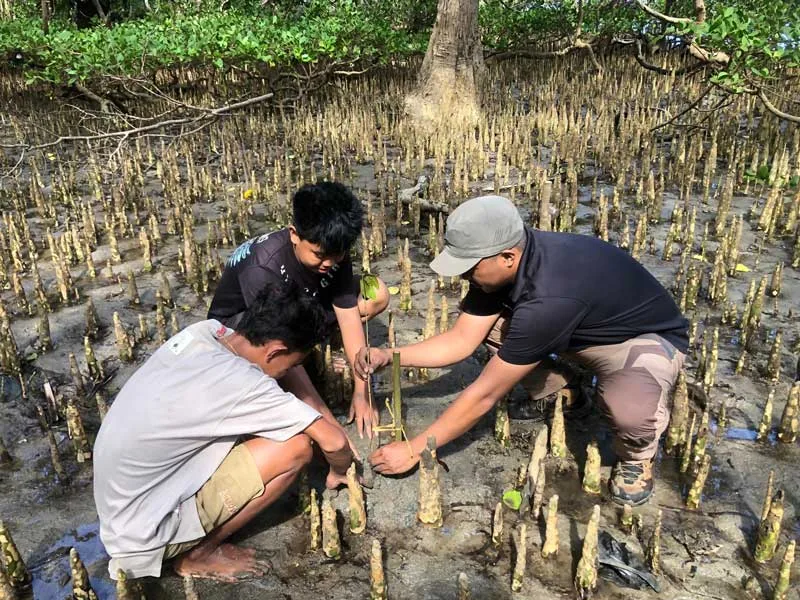
On a stretch of coastline in eastern Indonesia, a quiet but meaningful effort is taking root. In Dapuluhe Hamlet, Kampung Bira, in the Sangihe Islands, 100 mangrove seedlings were planted to mark World Wetlands Day, observed each year on February 2.
What might seem like a small-scale initiative carries a larger purpose: protecting a vulnerable coastline while nurturing environmental awareness among the next generation.
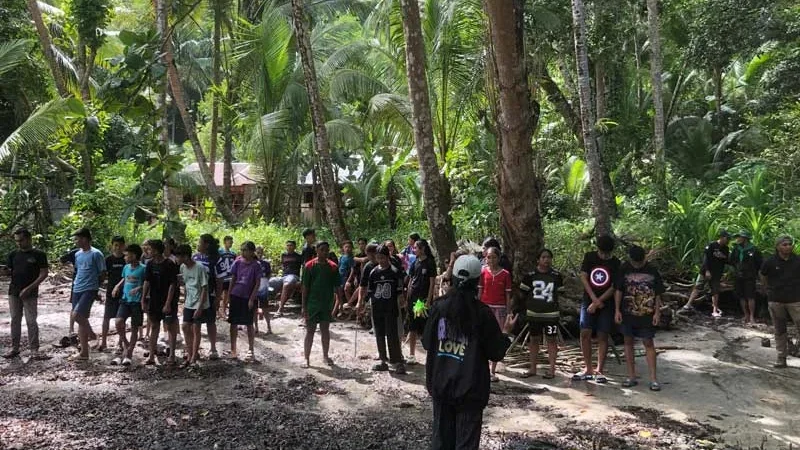
The planting was led by SMP Negeri SATAP Bira as part of a co-curricular program for students in grades 7 through 9, under the theme “Mangrove Care.”
For these students, the activity offered more than a break from routine lessons—it became an opportunity to engage directly with the environment they call home.
By stepping outside the classroom, students were able to see firsthand the role mangroves play in maintaining coastal ecosystems. The experience turned abstract lessons about conservation into something tangible, rooted in their own community.
The initiative was further strengthened through collaboration with Burung Indonesia and GenPI (Generasi Pesona Indonesia) Sangihe, bringing together educators, conservationists, and local advocates.
The partnership reflects a broader, shared commitment to protecting coastal ecosystems and preserving the biodiversity that depends on mangrove habitats.
Bira Village: Community Initiative and Coastal Stewardship
In Kampung Bira, this spirit of collaboration is increasingly evident. As a partner village of Burung Indonesia, the community has begun to show growing awareness of the importance of safeguarding its coastal environment. In some cases, that awareness has translated into action.
Local residents have started their own small initiatives, driven by concern over the environmental challenges they face. These efforts signal a shift—from viewing conservation as an external program to embracing it as a shared responsibility.
There is a clear hope that the 100 mangroves planted will not remain a symbolic gesture, but will continue to grow under the care of students, residents, and partner organizations alike.
Planting Mangroves for the Future
Healthy mangroves serve as natural buffers against coastal erosion while also providing essential habitats for marine life.
Their role is particularly critical in areas like Kampung Bira, where environmental pressures are already being felt. Around 15 families in the area have experienced the impacts of coastal abrasion, underscoring the urgency of protective measures.
For these communities, mangrove planting is not just an environmental activity—it is an investment in resilience.
For families whose livelihoods depend on the sea, mangroves are closely tied to both economic stability and long-term survival. Protecting them means protecting the future.
Through this modest but meaningful effort, there is hope that collective awareness will continue to grow.
If sustained, initiatives like this could ensure that the mangrove ecosystems of Kampung Bira endure—not just as a conservation project, but as a lasting environmental legacy for generations to come
