
For generations, the Sangirese people have lived by a simple yet profound principle: harmony with nature.
In this maritime community in eastern Indonesia, humans and the natural world are not seen as separate, but as interconnected.
Traditions passed down by ancestors are not merely preserved as cultural artifacts—they are practiced as living systems of balance, shaped by spiritual awareness and respect for the environment.
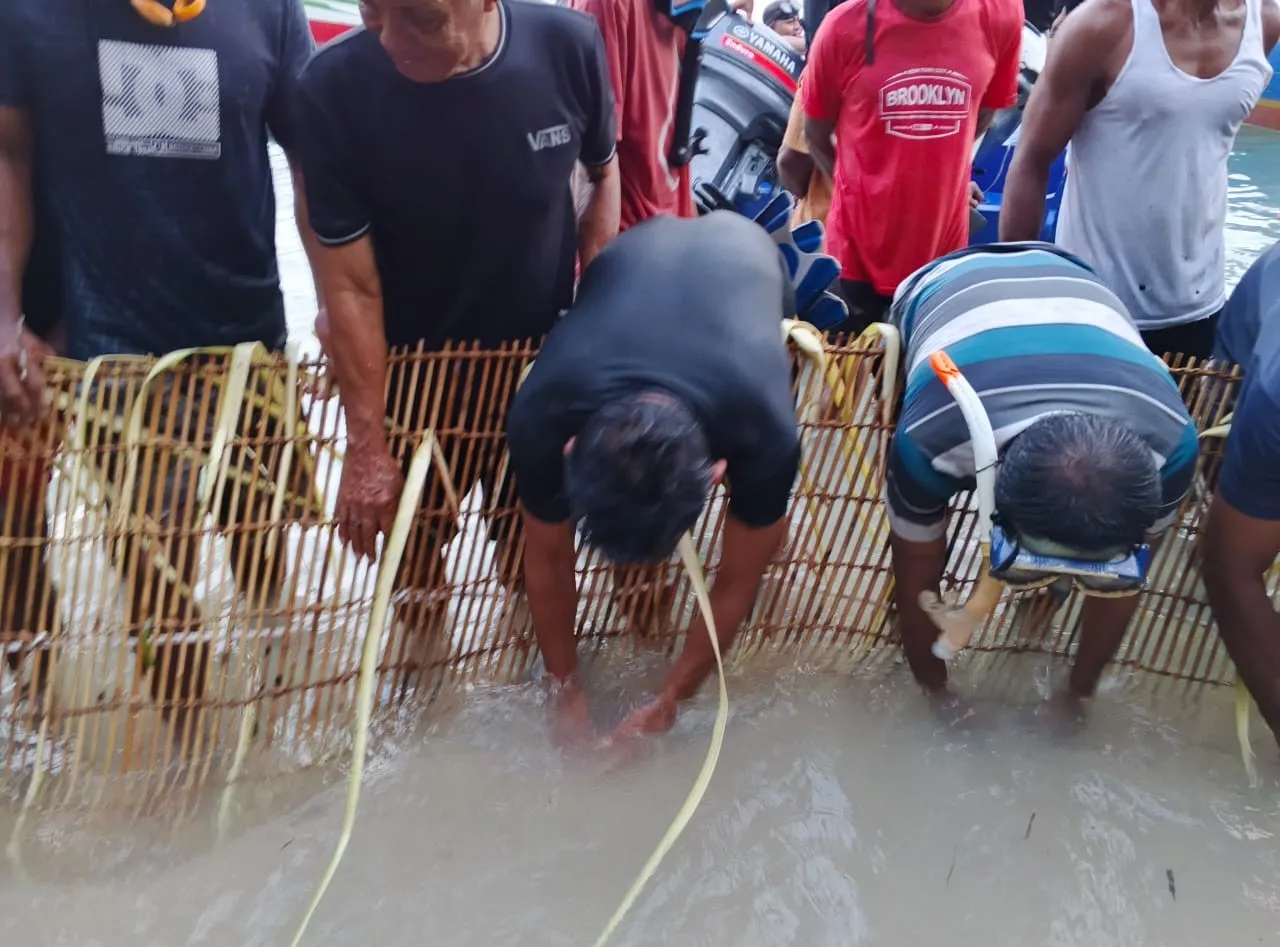
One such tradition is Maneke, a communal fishing ritual that reflects this relationship. At its core lies Seke, a traditional method once practiced on Para Lelle Island but largely abandoned since the 1980s.
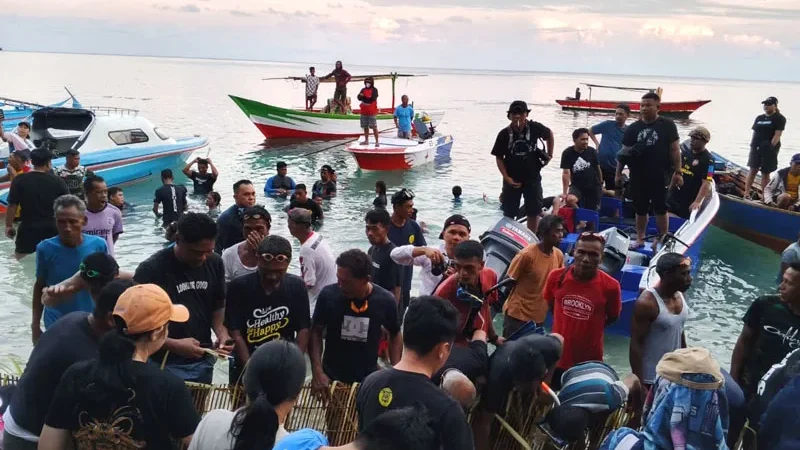
When revived in 2024, the results were striking. Fish gathered in large numbers near the shore, drawing attention and awe from both locals and visitors. A year later, in 2025, the catch was far smaller.
The contrast has prompted questions. But for many in the Sangirese community, the answer lies not only in environmental factors, but in the shifting meaning of the ritual itself.
Traditionally, Seke is more than a fishing technique. It is a cultural process governed by a sequence of rituals, each carrying symbolic meaning.
Communal celebration takes place at two key moments—when residents gather to weave the Seke fishing gear, and when the catch is shared as a collective expression of gratitude.
Between these stages lies Mamata, a sacred ritual marking the beginning of the fishing process. Led by a Tonaseng, or ritual leader, Mamata involves cleansing the fishing gear with fresh coconut water and performing symbolic gestures believed to invite ancestral presence.
Following the ritual, the village enters a period of quiet. Lights are dimmed, and social activity is kept minimal—an intentional pause meant to maintain balance between human life and the natural world.
Timing is equally important. The ritual is traditionally scheduled according to local lunar calculations and tidal patterns, known as Letu, when sea conditions are considered most favorable.
Such knowledge, passed down through generations, reflects a form of ecological wisdom rooted in observation and belief.
For the Sangirese people, it is this balance—between the seen and unseen—that gives meaning to the ritual.
In recent years, however, there are signs that Maneke is being reframed. What was once a sacred process has, at times, taken on the character of a public festival—celebrated widely, but not always accompanied by the full sequence of traditional practices.
For some observers, this shift risks weakening the essence of the tradition. Yet measuring the success of Seke Maneke solely by the volume of fish misses the point.
For coastal families whose livelihoods depend on the sea, tradition and nature remain deeply intertwined. Around 15 families in the Sangihe Islands have already experienced coastal erosion, underscoring the fragile relationship between people and their environment.
Within this context, Seke is not just about results—it is about values: cooperation, shared responsibility, and respect for ancestral knowledge.
The catch, as tradition dictates, is distributed among the community. It is a reminder that the ritual is rooted in togetherness, not individual gain.
So while the 2025 harvest may not have matched the abundance of the previous year, it does not necessarily signal failure. Instead, it offers a moment of reflection—on what is preserved, what is practiced, and what may be at risk of being lost.
For those who continue to uphold it, Seke Maneke remains more than a tradition. It is a living expression of balance between people, culture, and the sea—and a legacy that depends on how faithfully it is carried forward.
